
10 Stunning Half Bathroom Ideas for Older Homes That Feel Fresh and Updated

Your vintage half bath doesn’t have to scream “stuck in 1987” anymore. These design concepts prove that older homes can handle contemporary style without losing their original charm.
The best part? You don’t need a full gut renovation to make these transformations happen.
Whether you’re dealing with awkward layouts, dated fixtures, or that unfortunate mauve tile situation, these ideas work with what you’ve got. Think of them as love letters to your older home’s quirks, not attempts to erase them.
Ready to give your powder room the glow-up it deserves? Let’s dive in.
1. Bold Wallpaper Statement With Classic White Fixtures
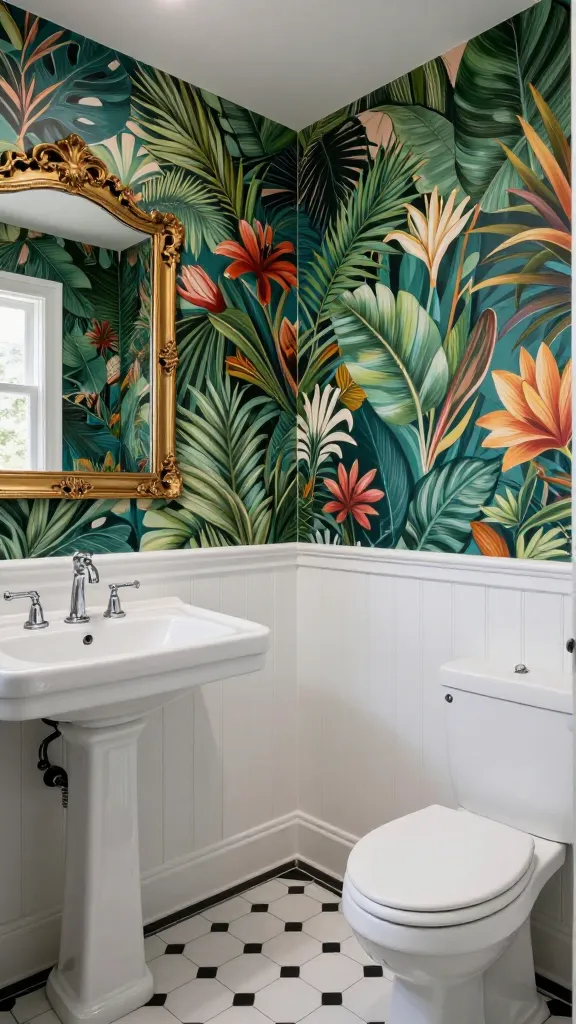
Here’s the thing about older homes – they usually come with perfectly good white porcelain fixtures that just need some serious visual backup. Enter maximalist wallpaper to do all the heavy lifting.
Cover every inch of wall space in a dramatic botanical print, geometric pattern, or vintage-inspired mural. We’re talking floor to ceiling, no wimping out with a single accent wall. The contrast between your ornate walls and those simple white pedestal sinks and classic toilets creates an intentional, curated vibe rather than a “we haven’t updated since 1992” situation.
Key Elements:
- Peel-and-stick or traditional wallpaper in bold patterns
- Existing white fixtures (leave them alone, they’re perfect)
- Simple brass or matte black hardware
- Vintage-style mirror with ornate frame
This approach works especially well if your fixtures are in good shape but everything else feels blah. The wallpaper does all the talking while your vintage pieces become charming focal points instead of dated eyesores.
2. Moody Black Wainscoting With Original Tile
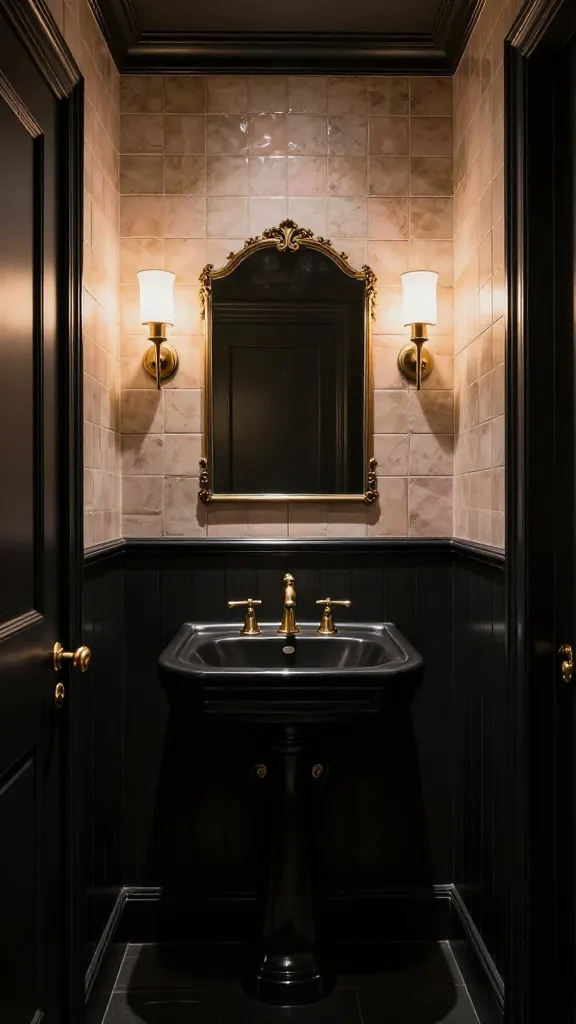
Got original tile that’s not offensive but not exactly trendy? Paint everything else black and watch that tile suddenly look intentional.
Install board and batten wainscoting or use your existing picture molding, then paint it all in a rich charcoal black or deep navy. Your boring beige or pink tile now reads as a curated vintage choice against the dark backdrop. Add brass sconces flanking the mirror and maybe a vintage brass faucet if your budget allows.
Paint Strategy:
- Wainscoting in deep charcoal or navy
- Upper walls in coordinating dark shade or crisp white
- Ceiling in bright white to prevent cave vibes
- Trim and molding in contrasting color
The darkness adds instant sophistication and makes your space feel like a moody English cottage bathroom. Trust me, your guests will think that pink tile was a deliberate choice.
3. Vintage Apothecary Meets Modern Minimalism
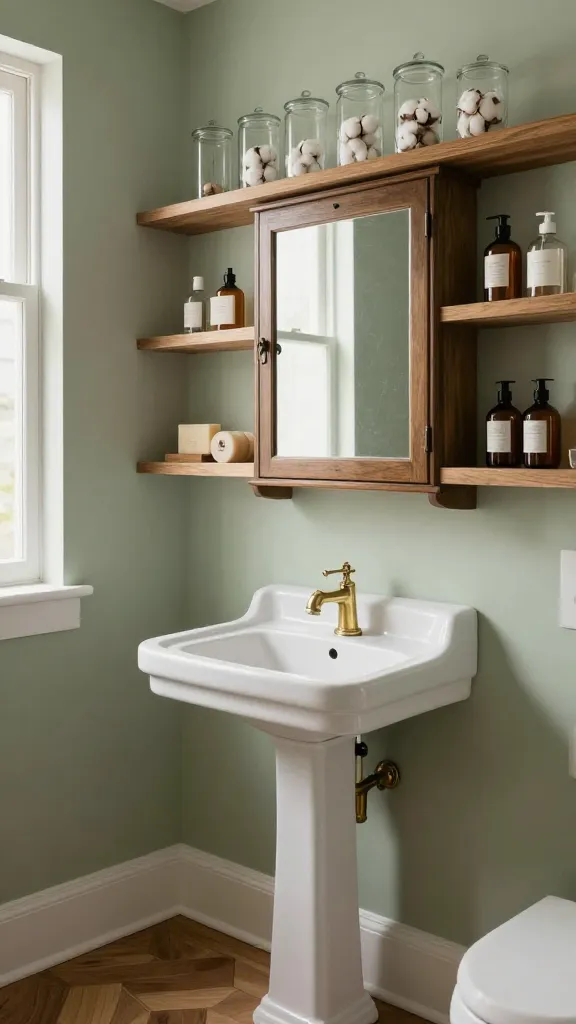
This design plays up the “old” in your old house while keeping things clean and functional. Think open shelving with carefully curated glass apothecary jars, vintage medicine cabinets, and a seriously edited color palette.
Paint walls in soft sage green or dusty blue – colors that feel period-appropriate without being fusty. Replace your current mirror with a vintage medicine cabinet (check architectural salvage shops) and install floating wood shelves to display pretty hand soaps, cotton balls in glass containers, and a small plant or two. Keep your countertops completely clear.
Display Must-Haves:
- Glass apothecary jars for cotton balls and swabs
- Vintage glass bottles for hand soap
- Small potted plants (pothos or snake plant)
- Folded linen hand towels in neutral tones
This look says “I appreciate history but I’m not living in a museum.” It’s collected without feeling cluttered, vintage without being grandma’s house.
4. Two-Tone Paint Technique With Preserved Character
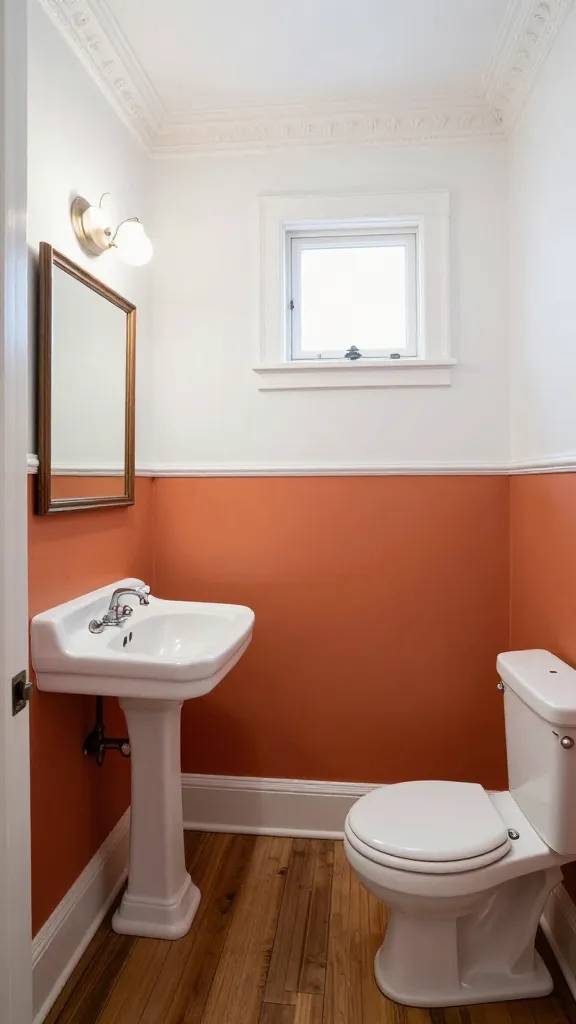
Sometimes the simplest updates pack the biggest punch. A two-tone paint job can completely transform your space without touching a single fixture or tile.
Paint the lower half of your walls (typically below the chair rail or at about 32 inches up) in a deep terracotta, forest green, or warm gray. Keep the upper walls and ceiling in crisp white or soft cream. This technique draws the eye horizontally, making small half baths feel wider, and it highlights any original molding or trim details your home already has.
Update your light fixture to something with vintage-inspired flair – maybe a schoolhouse pendant or simple sconces. Replace old hardware with oil-rubbed bronze or matte black pieces. Add a large round mirror to soften all those straight lines.
The beauty here is that you’re working entirely with paint and accessories. No contractor required, and you can DIY this transformation in a weekend.
5. Art Gallery Powder Room With Original Features
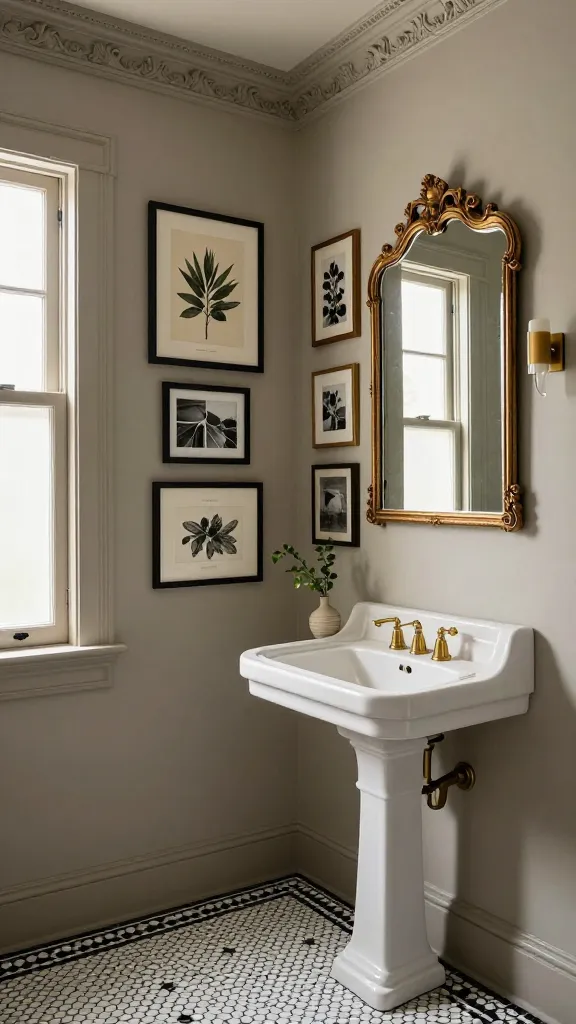
Turn your half bath into a mini art gallery that celebrates both your collection and your home’s vintage bones. Paint walls in a soft gray or greige to create a neutral backdrop, then hang a gallery wall of framed prints, photographs, or vintage botanical illustrations.
The key is treating your bathroom like any other room in the house. Use real art (not bathroom-specific decor), quality frames, and a thoughtful arrangement. Mix frame sizes and styles but keep a cohesive color story. Your original white fixtures and classic tile become part of the curated aesthetic rather than elements you’re trying to hide.
Gallery Wall Tips:
- Start with a large central piece and build around it
- Keep frame colors to two or three finishes
- Include varied art sizes for visual interest
- Consider vintage mirrors as part of the arrangement
This approach works brilliantly if your bathroom has good bones but just feels uninspired. The art adds personality and makes the space feel intentionally vintage rather than accidentally dated.
6. Subway Tile Refresh With Colorful Grout
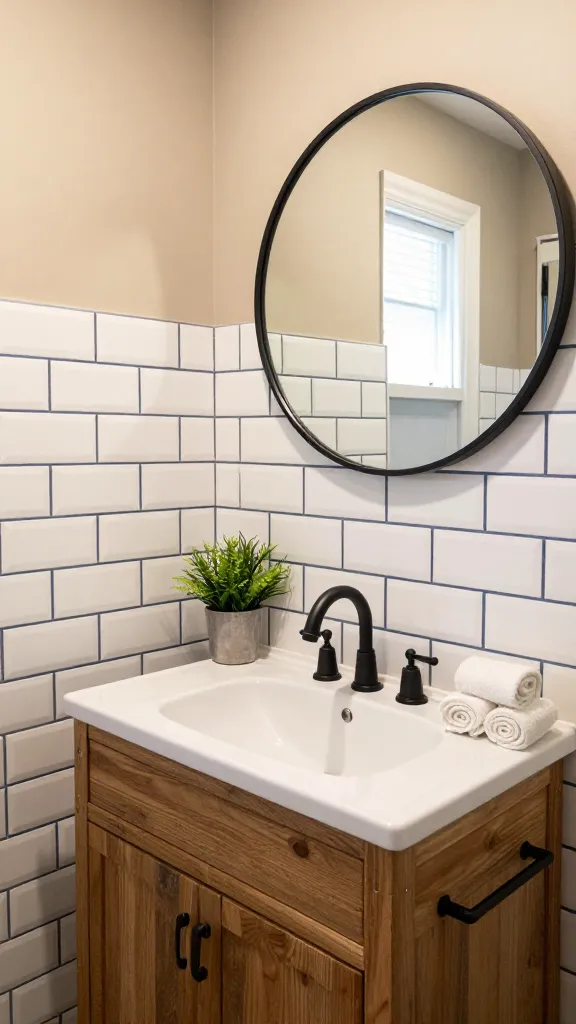
If you’ve got original white subway tile that’s in decent shape, don’t rip it out – regrout it in a surprising color. Navy grout, charcoal gray, or even deep green can completely transform white tile from boring to bold.
Pair your newly dramatic tile with a vintage-style vanity in natural wood or painted in a complementary color. Add matte black plumbing fixtures and a large pivot mirror for a modern touch. Paint the remaining walls in a warm neutral that picks up undertones from your grout color.
FYI, regrouting is way cheaper than retiling and you can DIY it if you’re reasonably handy. The transformation is absolutely wild for such a small investment.
This design proves that sometimes the “dated” elements in older homes just need better supporting players. Your grandma’s subway tile suddenly looks like a deliberate design choice instead of something you’ve been meaning to replace.
7. Warm Minimalism With Natural Materials
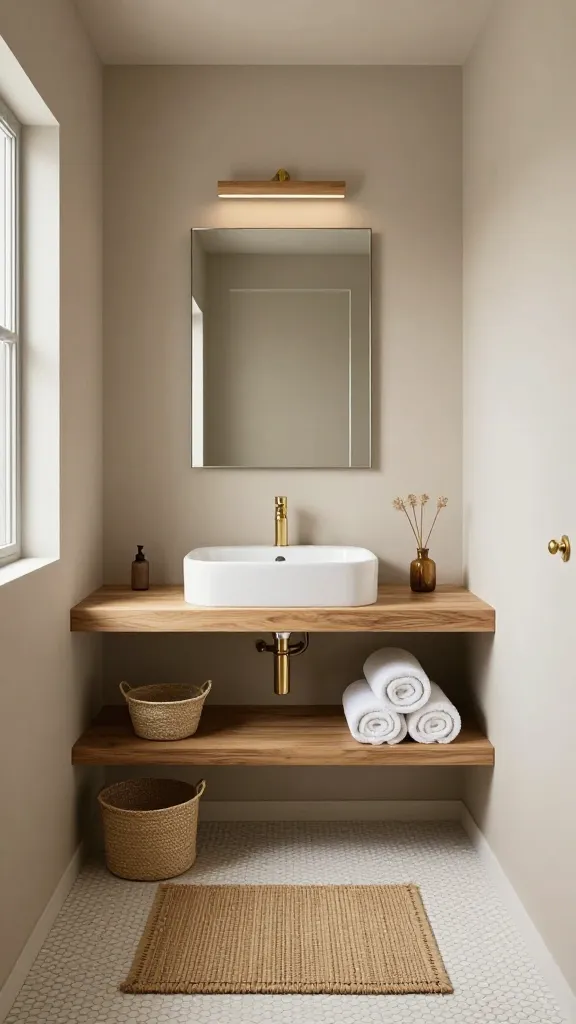
Combat the cold feeling that older bathroom tiles can give off by layering in tons of warm wood tones and natural textures. Think Japanese minimalism meets vintage American home.
Install a floating wood shelf under your mirror for storage, add a teak bathmat, and bring in woven baskets for extra towels. Paint walls in a warm off-white or soft taupe. Replace your light fixture with something simple in wood and brass. Keep your original fixtures but update the faucet to a brushed gold or warm brass finish.
Natural Elements to Include:
- Wood floating shelves or ladder shelf
- Woven seagrass or jute baskets
- Teak bath mat or stool
- Live plants in ceramic pots
- Natural linen hand towels
The warmth from natural materials makes even the coldest vintage tile feel cozy and intentional. This works especially well if your bathroom gets good natural light.
8. High-Contrast Drama With Original Hexagon Tile
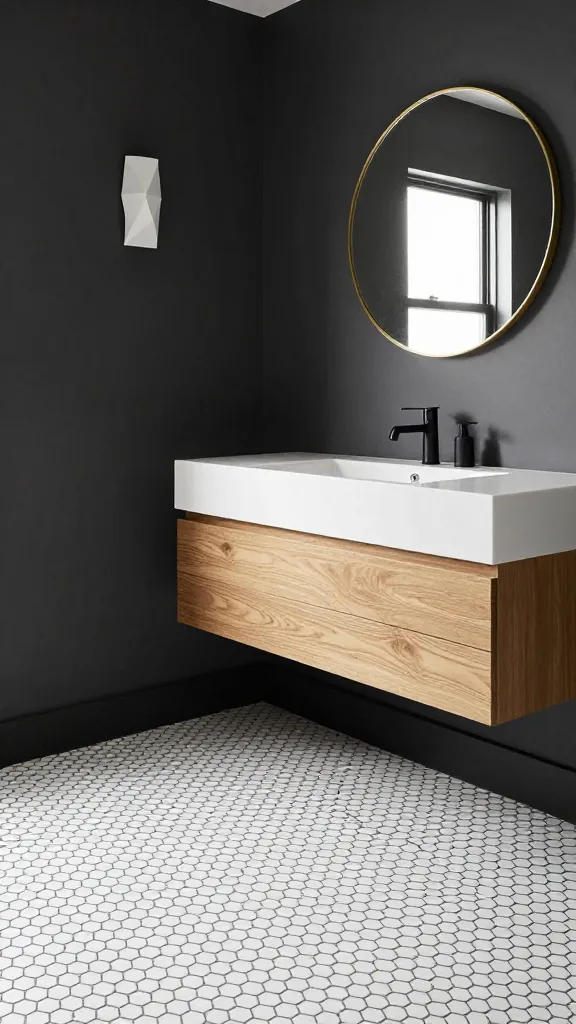
Original hexagon floor tile is actually having a major moment right now, so if you’ve got it, celebrate it. Paint your walls in a dramatic charcoal gray or deep blue-black to make that floor pattern pop like crazy.
Add a modern floating vanity in white oak or matte black – the contemporary lines create amazing tension with the vintage floor. Install a large frameless mirror or go with a round brass-framed mirror for warmth. Update lighting to something sculptural and modern, like a geometric sconce or linear fixture.
The contrast between your modern choices and vintage tile creates this collected-over-time feeling that’s so much more interesting than a fully coordinated bathroom. You’re showing off your home’s history while proving you live in the present.
Seriously, people pay big money to install hex tile that looks like yours. Own it.
9. Soft Traditional With Updated Fixtures
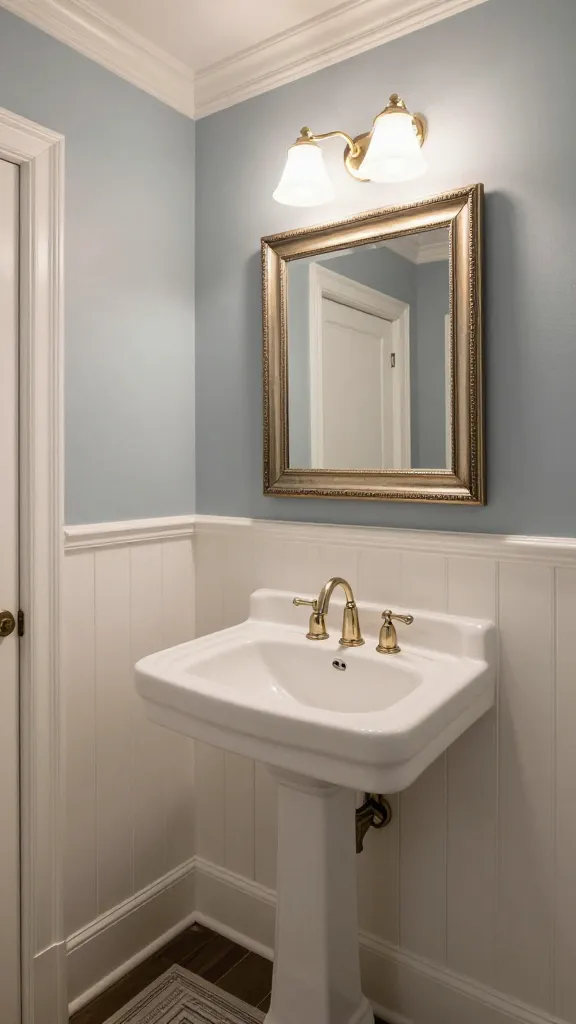
Sometimes older homes just want to be traditional, and that’s totally fine. Lean into classic colors, traditional patterns, and timeless pieces while updating the stuff that actually matters for function.
Paint walls in a soft blue-gray or warm greige. Add framed wainscoting if you don’t have it already (paint it the same color as the walls for a subtle effect or in crisp white for more contrast). Replace your faucet with a traditional cross-handle style in polished nickel. Hang a classic framed mirror and add sconces with linen shades.
Traditional Touches:
- Framed medicine cabinet or traditional mirror
- Cross-handle faucets in polished nickel
- Linen or fabric lampshades on sconces
- White porcelain accessories
- Simple crown molding
This approach updates your space without fighting against your home’s inherent style. It feels fresh but also feels like it belongs in your older house, which is honestly the sweet spot.
10. Industrial-Vintage Hybrid With Exposed Elements
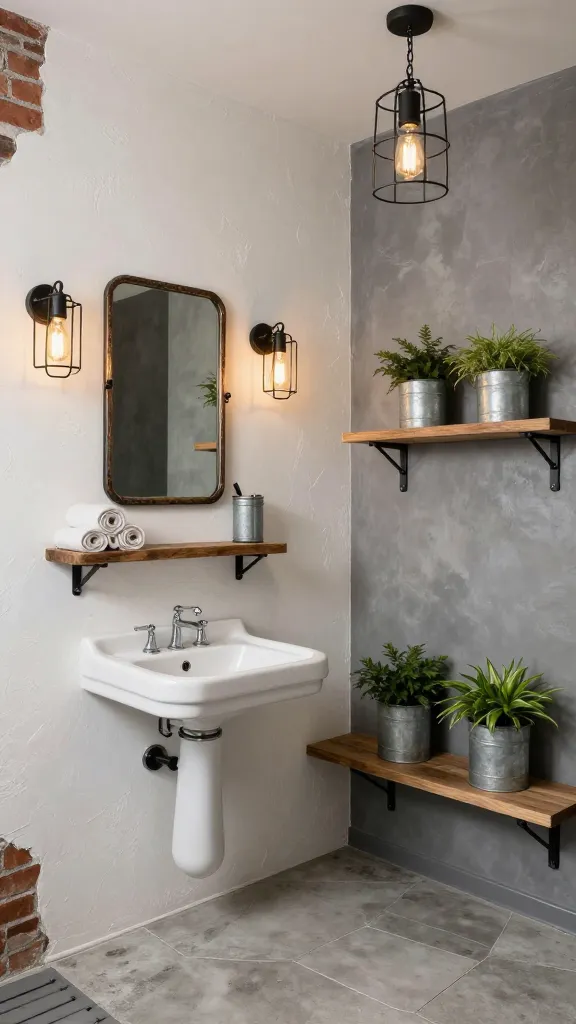
Embrace any quirks your old house has – weird pipes, odd angles, original plaster walls – and pair them with industrial lighting and metal accents. This style makes imperfections look intentional.
Leave walls in their original plaster texture (just paint them in a modern color like warm white or soft gray). Add an industrial pipe shelf or metal and wood floating shelf. Install Edison bulb sconces or a cage pendant light. Use galvanized metal accessories and vintage mirrors with metal frames. Keep your original fixtures but pair them with industrial-style hardware in matte black or aged brass.
The industrial elements give your vintage bathroom an urban loft vibe that feels current and cool. It’s perfect if your half bath is in a basement or has those wonderful old house imperfections that you don’t want to hide.
Your older home’s half bathroom has so much potential hiding under those outdated finishes. Pick the approach that speaks to your personal style and your home’s existing character, then commit to it fully. The best updates honor your home’s history while making the space work for how you actually live today.