
Free Wall Paint Calculator
🎨 Premium Wall Paint Calculator
Planning a room makeover? Enter your room’s dimensions below to find out exactly how much paint you need to buy.
Start Your Calculation
The guesswork stops here. Whether you're painting one bedroom or a whole house, our calculator gives you a number you can actually take to the hardware store.
Enter your room dimensions above, select your number of coats, add your doors and windows, and hit Calculate. Takes about 30 seconds — and it's a lot cheaper than buying an extra gallon you don't need.
How Much Paint Do I Need? A Room-by-Room Guide (With Calculator)
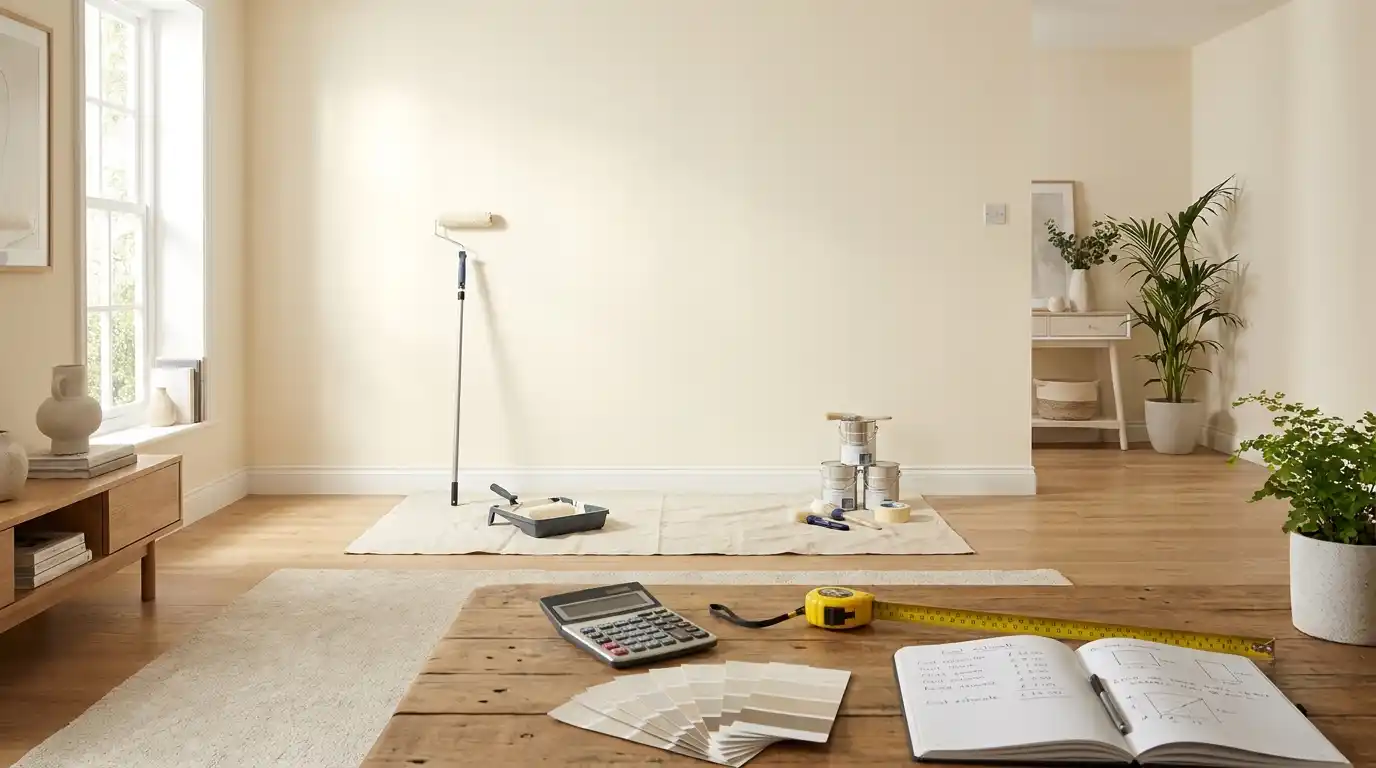
You've picked the color. You've got the weekend blocked off. And then you're standing in the paint aisle doing mental math with no idea whether you need two cans or five.
It's one of those surprisingly annoying parts of any painting project — and it trips up experienced DIYers as often as first-timers. Buy too little and you're making a second trip mid-project. Buy too much and you've got half-used cans sitting in your garage until they dry out.
That's what our Premium Wall Paint Calculator is here to fix. Punch in your room dimensions, tell it how many doors and windows you're working around, and it'll tell you exactly how much paint to buy.
But if you want to understand the math behind it — or if you're the kind of person who likes knowing why before hitting Calculate — read on.
Why Estimating Paint Is Harder Than It Looks
Most people start with the obvious: length × width × height. That gives you the total wall area, roughly speaking. But here's what that formula misses:
You're not painting doors or windows. A standard interior door is about 20 square feet. A typical window runs 15 square feet. If your room has two of each, that's 70 square feet you're subtracting from your total — nearly a full gallon of savings on a 2-coat job.
Different surfaces drink paint differently. New drywall is porous and absorbs a first coat almost completely. Rough or textured walls need more paint than smooth ones. A wall you primed last week behaves differently than a wall you're painting over an existing dark color.
The number of coats changes everything. One coat of a touch-up? Different math entirely from painting a pale yellow room white, which might need three full coats to fully cover.
Our calculator accounts for all of this. You enter the real numbers — room length, width, height, coats, doors, windows — and it works out the usable coverage.
How the Calculator Works
Here's what's happening under the hood when you hit that Calculate button.
Step 1: Total Wall Area
The calculator multiplies your perimeter (length + width, doubled) by your wall height. For a 12 × 14 room with 9-foot ceilings:
Perimeter = (12 + 14) × 2 = 52 feet Wall area = 52 × 9 = 468 square feet
Step 2: Subtract Doors and Windows
Each door removes approximately 20 sq ft. Each window removes approximately 15 sq ft. If you've got 2 doors and 2 windows:
Deductions = (2 × 20) + (2 × 15) = 70 sq ft Paintable area = 468 − 70 = 398 square feet
Step 3: Multiply by Coats
Choosing 2 coats? Double the coverage needed.
398 × 2 = 796 square feet of total coverage needed
Step 4: Convert to Gallons
Most interior paints cover 350–400 square feet per gallon. The calculator uses a standard 350 sq ft/gallon rate to give you a slightly conservative (read: practical) estimate.
796 ÷ 350 = 2.27 gallons → round up to 3 gallons
Simple enough once you see it. But doing that math manually for multiple rooms while standing in a hardware store is where mistakes happen.
Choosing the Right Number of Coats
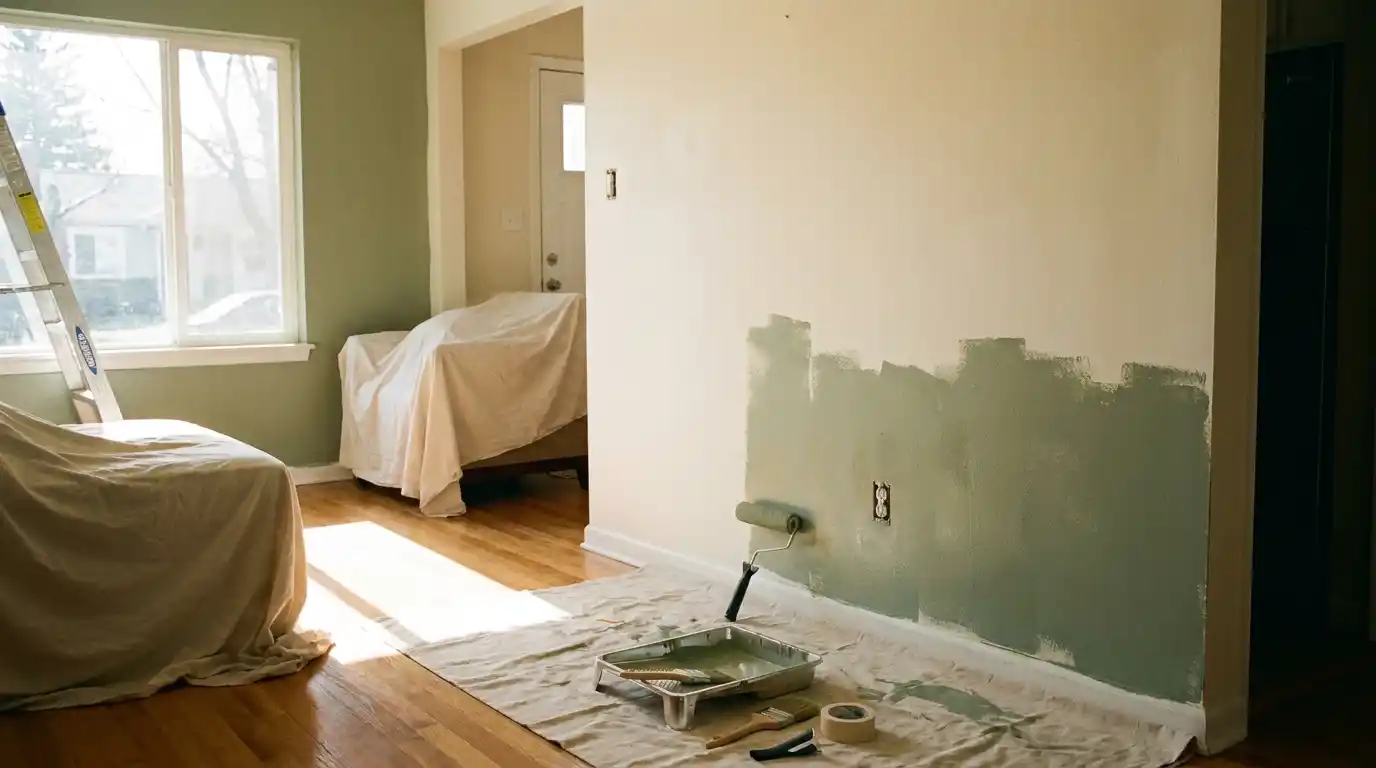
The coat selector is probably the most important field in the calculator, and the one people get wrong most often.
1 Coat — Touch-Ups Only
One coat makes sense when you're doing a small repair, freshening up a wall that's already the right color, or applying a very similar shade over an existing one. It's not really suitable for full room repaints.
2 Coats — The Standard for Most Jobs
Two coats is the baseline for any proper paint job. The first coat seals the surface and establishes the color. The second coat evens everything out and gives you that clean, consistent finish. Most paint manufacturers actually void their coverage guarantees if you only apply one coat.
For most homeowners repainting a room in a similar or lighter color, 2 coats is the answer.
3 Coats — Dark to Light or New Construction
Going from a deep burgundy to a light cream? You'll likely need three coats — possibly even a tinted primer first. Same goes for painting over fresh drywall without a separate primer, or working with bargain-bin paint that doesn't cover well. When in doubt, the calculator's 3-coat option keeps you from running short.
Common Painting Mistakes That Waste Paint (and Money)
These are the things people do when they're estimating by gut instead of calculating properly.
Forgetting to account for trim separately. Your walls and your trim are different products. The calculator handles wall paint. If you're also painting baseboards, door frames, and crown molding, you'll need a separate estimate for trim paint.
Buying the cheapest paint. Low-coverage paints often cost less per can but require an extra coat to look right — which means you're buying more cans anyway. A mid-range paint with good coverage ratings usually works out cheaper in the end.
Not accounting for texture. Brick, stucco, and heavy knockdown textures can eat up 20–30% more paint than smooth walls. If you're painting a heavily textured surface, mentally add a buffer to whatever the calculator gives you.
Painting over a different sheen without the right prep. Going from flat to satin? Or satin to flat? The paint may not bond well without a light sanding or a bonding primer first, which affects your coverage.
Room-by-Room Paint Estimates: Quick Reference
Every room is different, but here are ballpark figures for common room sizes with standard 9-foot ceilings and 2 coats of paint. These are starting points — use the calculator for exact numbers.
| Room | Typical Size | Approx. Paint Needed (2 coats) |
|---|---|---|
| Small bathroom | 5 × 8 ft | 1 gallon |
| Bedroom | 10 × 12 ft | 2 gallons |
| Master bedroom | 14 × 16 ft | 2–3 gallons |
| Living room | 16 × 20 ft | 3–4 gallons |
| Open-plan great room | 20 × 24 ft | 5–6 gallons |
Keep in mind these don't account for your specific door/window layout. A bedroom with three windows will need noticeably less paint than the same room with one small window.
How Much Does House Paint Cost?
Paint prices vary a lot depending on brand, finish, and whether you're buying sample sizes or gallons. Here's a rough breakdown:
Budget-tier interior paint: $20–$30 per gallon. Decent for low-traffic rooms or spaces you're not precious about. Usually needs more coats.
Mid-range paint (the sweet spot): $35–$55 per gallon. Most name-brand options from major hardware stores fall here. Good coverage, decent durability, and they come in a wide range of finishes.
Premium paint: $60–$90+ per gallon. Designer brands, cabinet-specific paints, or options with built-in primer. Genuinely worth it for high-use areas like kitchens, bathrooms, and kids' rooms.
For a typical bedroom needing 2 gallons, you're looking at $70–$110 in paint alone before brushes, rollers, tape, and drop cloths.
Tips for Getting the Most Out of Your Paint
A few things that actually make a difference once you're in the room:
Box your paint. If you're buying multiple cans of the same color, pour them all into a large bucket and stir together before you start. Even slight batch variations can show as streaks on the wall once it dries.
Don't skimp on prep. Cleaning walls, filling holes, and taping edges properly isn't glamorous, but it's where the difference between a good paint job and a great one actually lives. Paint sticks better to clean surfaces, and your edges will be sharper.
Roll in a "W" or "M" pattern. Instead of rolling straight up and down, make a wide W or M shape, then fill it in. This spreads the paint more evenly and reduces streaking.
Let the first coat fully dry. This sounds obvious, but it's where patience breaks down. Applying a second coat over a tacky first coat causes peeling and uneven texture. Check the can's recoat time — usually 2–4 hours for latex paint, longer for oil-based.
Buy a little extra and keep it. Once the calculator gives you an estimate, round up to the next gallon. Keep any leftover in a tightly sealed can. When you need a touch-up six months from now, you'll have an exact color match waiting.
Frequently Asked Questions
Does the calculator include the ceiling? No — it calculates wall coverage only. Ceilings typically require a separate flat or matte paint. To estimate ceiling paint, just multiply room length × room width, then divide by 350 (sq ft per gallon) and multiply by your number of coats.
Should I prime first? If you're painting new drywall, going very light over a dark color, or covering stains, yes. Primer seals the surface and gives paint something to grab onto. The calculator assumes you're painting over an already-painted or primed surface. If you're applying primer separately, you'll need a similar quantity of primer to your first coat of paint.
What if my walls are really textured? Add 15–25% to the calculator's estimate. Textured surfaces have more actual surface area than a smooth wall of the same dimensions.
What's the best finish for different rooms? Flat/matte works well for low-traffic bedrooms and ceilings. Eggshell handles most living areas well. Satin is a good call for kids' rooms, hallways, and anywhere you might be wiping down walls. Semi-gloss is standard for bathrooms, kitchens, and trim.
Can I use this for exterior paint? The square footage math works the same way, but exterior paints have different coverage rates and you'll need to account for siding texture, trim, and multiple surfaces. A dedicated exterior paint calculator will give you a more reliable estimate for outdoor projects.